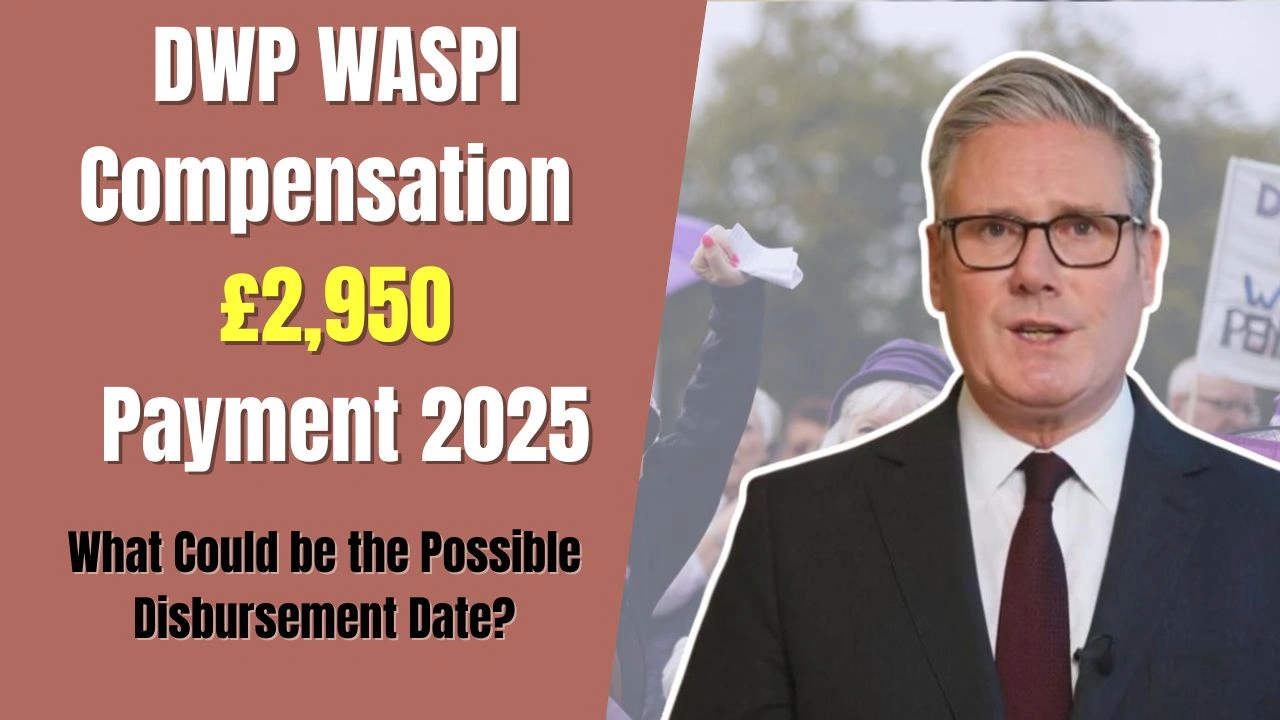
The proposed DWP WASPI Compensation of £2,950 aims to support women born in the 1950s affected by State Pension age changes. While October 2025 has been suggested, delays and legal hurdles mean payments are more likely in 2026.For millions of women born in the 1950s, the long wait for recognition and justice over the State Pension age change continues. Many were hit hard by the sudden shift in retirement plans, often without proper notice. The idea of DWP WASPI Compensation—a one-off £2,950 payment—has become a critical part of this ongoing battle.
Campaigners, politicians, and affected women alike are watching closely to see if 2025 could finally bring some form of financial redress.The conversation around DWP WASPI Compensation has gained traction after the Ombudsman’s ruling in 2024, which found the Department for Work and Pensions guilty of maladministration. While October 2025 has been floated as a possible payout date, several hurdles remain. From legal hearings to political approval, much still hangs in the balance. This article explores what we know so far, what might happen next, and when women might actually see the money.
DWP WASPI Compensation: Where Things Stand in 2025
The proposed DWP WASPI Compensation of £2,950 stems from a formal investigation by the Parliamentary and Health Service Ombudsman, which found that the Department for Work and Pensions committed maladministration in how it communicated State Pension age changes to women born in the 1950s. The Ombudsman concluded that many of these women were not given adequate notice, leading to unexpected financial hardship and disrupted retirement plans. Despite acknowledging the Ombudsman’s findings, the government has yet to implement or fund any official compensation scheme. A crucial legal hearing scheduled for December 2025 will examine whether the government’s refusal to act is legally justifiable. Until a ruling is made and political will aligns, any potential disbursement remains uncertain and subject to delay.
Overview of the £2,950 WASPI Compensation Proposal
| Key Item | Details |
| Proposed Amount | £2,950 (one-time, tax-free compensation) |
| Target Group | Women born in the 1950s affected by sudden pension age changes |
| Purpose | Redress for poor communication by DWP, not to replace pension income |
| Ombudsman Recommendation | Level 4 injustice redress (up to £2,950) |
| Government Response | Acknowledged maladministration but no commitment to compensation |
| Legal Challenge Date | High Court hearing set for 9–10 December 2025 |
| Scheme Status | No formal scheme approved or budgeted yet |
| Speculated Payout Timing | October 2025 (seen as optimistic by experts) |
| Expected Actual Timeline | Possibly mid-to-late 2026 if approved post-legal challenge |
| Risk of Scams | High; fake claims, unofficial sites, and phishing emails reported |
WASPI Compensation: The Proposal in Focus
The idea behind the WASPI campaign is not to reimburse lost pensions, but to offer financial recognition for the poor handling of communication around pension age increases. Women were often left unaware that their retirement would be delayed, forcing many to change their financial and career plans with little warning. The Ombudsman recommended a Level 4 compensation payment, which translates to up to £2,950 for each eligible woman.
Importantly, this is not intended to be a complex claims process. If the scheme is approved, payments could be made automatically using DWP records. That makes it easier to manage administratively but depends entirely on the government giving the green light to fund and operate the compensation.
The Ombudsman’s Ruling and Its Importance
In March 2024, the Ombudsman formally ruled that the DWP was at fault. It found that the department had failed to communicate the changes to women in a timely and clear manner. This was classified as maladministration—a serious failure in public service.
The Ombudsman also said that affected women should receive a Level 4 financial award, considered suitable for serious injustice. However, the Ombudsman does not have legal power to enforce these payments. That responsibility lies with Parliament, which has not yet agreed to fund or roll out any compensation scheme.
Government Stance: Support, Rejection, or Delay?
So far, the government has not accepted the full recommendation. While officials have acknowledged the findings, they have raised concerns about the cost of paying every affected woman and the fairness of a flat-rate payment system. Some ministers argue that not all women were caught off guard and that some knew about the changes well in advance.
The government has also expressed hesitation about the practical challenges of verifying eligibility and distributing the money. As a result, the progress of the compensation scheme has been slow, and many campaigners believe that delays are intentional to avoid setting a costly precedent.
Legal Battle: What to Expect
The WASPI legal team will present their case in the High Court on 9 and 10 December 2025. The hearing aims to challenge the government’s refusal to act on the Ombudsman’s recommendations. However, even if the court sides with WASPI, it cannot force ministers to make payments. The best it can do is tell the government to reconsider its stance or show that its decision was legally justifiable.
A judgment is expected by spring 2026. If the court finds that the government’s refusal was not legally sound, it would significantly increase pressure on ministers to introduce a compensation scheme.
Could October 2025 Be Realistic?
Many women are holding onto hope that October 2025 could be the payout date. However, this appears unlikely. There is no formal scheme approved, no budget allocated, and the legal process is still ongoing. Since the court hearing will not take place until December 2025, any real movement is unlikely before that.
Even in the best-case scenario, approving the scheme, verifying records, and distributing payments would take months. Realistically, mid-to-late 2026 seems a more achievable target if the scheme gets greenlit after the legal challenge.
Risks, Scams, and What to Watch Out For
Unfortunately, the attention around DWP WASPI Compensation has led to an increase in scams. Fraudulent websites and social media pages are offering “help” to claim compensation, often asking for bank details or charging fees.
To protect yourself:
- Only rely on official government channels or the official WASPI group
- Do not share personal or financial information with unofficial sites
- Avoid paying for services that promise to speed up or guarantee your compensation
- Ignore unsolicited emails claiming to process your compensation
Scammers are exploiting the emotional weight of this issue, so staying alert is critical.
What Eligible Women Can Do Now
While the outcome is still uncertain, there are steps that affected women can take:
- Review your DWP records to ensure your data is up to date and accurate
- Check your bank details with DWP to avoid issues if payments do begin
- Register for updates with WASPI or through trusted sources to stay informed
- Avoid unofficial websites and report suspicious activity
- Stay connected to parliamentary announcements or news from the legal proceedings
Being proactive will help avoid delays or errors if and when a compensation scheme is finally put in place.
FAQs about DWP WASPI Compensation
- Who qualifies for the £2,950 WASPI compensation?
Women born in the 1950s who were affected by the rise in State Pension age, especially those who received little or no warning. - Do women need to apply for compensation?
If a scheme is approved, payments are expected to be automatic using DWP records. No manual claims process has been confirmed. - Is the £2,950 payout guaranteed?
No. It is the maximum recommended by the Ombudsman, but the actual payment depends on Parliament’s approval of a compensation scheme. - Can the court force the government to pay?
No. The court can only tell the government to review or explain its decision. It cannot order ministers to release funds. - When might payments actually start?
If approved after the December 2025 hearing, payments could begin in mid to late 2026 following administrative setup.